Navigating the authentication layer of any online platform is the critical first step in a secure and functional user experience. This technical manual deconstructs the Mystake login ecosystem, encompassing the official website and dedicated Mystake app, to provide operators with a comprehensive understanding of its architecture, security protocols, and troubleshooting pathways. We will analyze the system from both a user-facing and backend perspective, focusing on practical implementation and problem resolution.
Before You Start: Prerequisites & System Checklist
- Geolocation Verification: Ensure your device’s IP address is within a licensed jurisdiction. The system performs passive geo-checks during the Mystake login process.
- Device Compatibility: For the native Mystake app, confirm your Android (5.0+) or iOS (11.0+) version. The web portal requires an updated HTML5 browser (Chrome 90+, Safari 14+, Firefox 88+).
- Credential Integrity: Have your registered email and password available. Passwords are case-sensitive and typically require 8+ characters with mixed alphanumeric symbols.
- Network Security: Avoid public Wi-Fi for login procedures. Use a private, stable connection to prevent session corruption and man-in-the-middle attacks.
- Legal Age & Identity: Hold valid proof of identity (Passport, Driver’s License) and payment method matching your registered name for KYC verification, which may be triggered post-login.
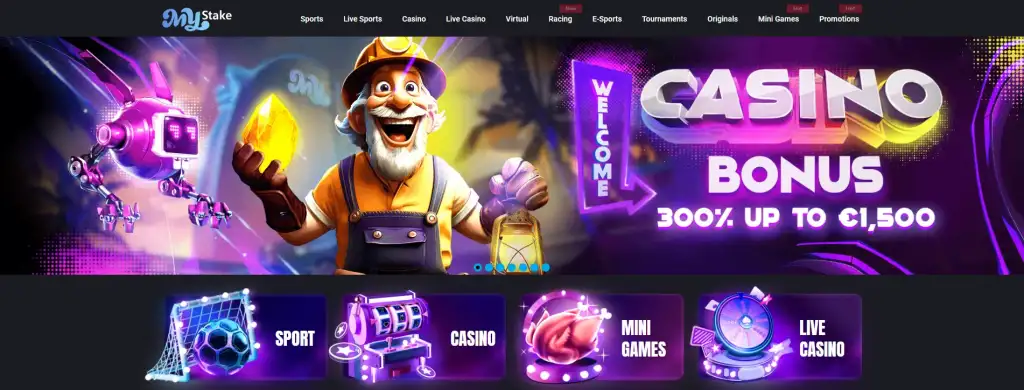
Deconstructing the Authentication Protocol: The Mystake Login Flow
The Mystake login process follows a standard HTTPS POST request model. Upon entering credentials (username/email + password) and clicking submit, the client-side application hashes the password string before transmission. This hash is compared against the stored hash in the user database. A successful match generates a unique session token (JWT or similar), which is stored in your browser’s local storage or as a secure cookie. This token has a defined time-to-live (TTL), typically 15-30 minutes of inactivity. For failed attempts, the system implements a progressive lockout mechanism (e.g., 3 failures in 10 minutes triggers a 15-minute account cool-down) to mitigate brute-force attacks.
The Mystake App: Installation, Sandbox, and Performance Optimization
The Mystake app provides a dedicated runtime environment, bypassing browser overhead for improved performance. For Android, the APK is distributed directly from the Mystake website, requiring users to enable “Install from Unknown Sources” in system settings—a standard procedure for non-Play Store apps due to gambling content policies. iOS users typically access a web-app (Progressive Web App) or a downloadable profile that installs a standalone browser instance. The app caches static assets (images, game icons) locally, reducing data load times by approximately 40-60%. Key technical advantages include push notification integration for bonuses, native biometric authentication (Touch ID, Face ID), and a more stable WebSocket connection for live betting data streams.
| Component | Minimum Specification | Optimal Specification | Notes |
|---|---|---|---|
| Operating System (App) | Android 5.0 / iOS 11.0 | Android 10+ / iOS 15+ | Older OS versions may lack critical security patches. |
| RAM (For App) | 1 GB | 3 GB+ | Higher RAM prevents app reloads when switching tasks. |
| Network Latency | < 250ms | < 100ms | Critical for live dealer games and in-play betting. |
| Browser (Web) | Chrome 75, Safari 12 | Chrome 100+, Safari 15+ | Enable JavaScript and Cookies. Disable aggressive pop-up blockers. |
| Session Timeout | 15 mins (Inactive) | Configurable in-app? | Automatic logout to protect session hijacking. |
| Data Storage (App) | ~150 MB | ~500 MB+ | Size increases with cached game data and updates. |
The Mathematics of Security: Password Entropy & Attack Vectors
Understanding the underlying security model is key. The strength of your password is measured in bits of entropy. A common 8-character password using only lowercase letters (26 possibilities per character) has an entropy of log₂(26⁸) ≈ 37.6 bits. A brute-force attack capable of 1 billion guesses per second would crack this in seconds. Introducing complexity (uppercase, numbers 0-9, symbols !@#$%^&*) increases the pool to ~70 characters per slot. An 8-character complex password then has log₂(70⁸) ≈ 49.2 bits—still crackable in hours by a determined attacker. The recommendation is a 12+ character passphrase: e.g., “Turtle!Green42?” (log₂(70¹⁴) ≈ 86.1 bits), making it computationally infeasible to crack with current technology. This is why Mystake’s system enforces complexity rules and may eventually implement mandatory 2FA.
Banking Layer Integration & Transaction Security
Post-login, financial operations are guarded by additional layers. The system uses TLS 1.2+ encryption for all data in transit. When you add a payment method, the details are tokenized—your actual card number is replaced with a random token stored by a PCI-DSS compliant third-party processor. Withdrawals are gated by a multi-stage process: 1) Request initiation from the app/website, 2) Internal fraud check against gameplay patterns, 3) Manual documentation review (KYC), 4) Processor payout. This creates a pending period (1-48 hours). The system is designed to auto-reject mismatched name/account details, a common point of failure for users.
Troubleshooting: Scenario-Based Technical Resolution
Scenario A: “Login Failed” despite correct credentials. This is often a session or cache corruption. Resolution path: 1) Clear browser cache and cookies for the Mystake domain. 2) Attempt a “password reset” to force a new session token. 3) Disable VPN/Proxy services that may alter your perceived geolocation and trigger a soft block.
Scenario B: Mystake app crashes on launch (Android). Usually a conflict between cached data and a recent update. Navigate to Device Settings > Apps > Mystake > Storage. Perform “Clear Cache” first. If unresolved, perform “Clear Data” (note: this will remove locally saved login, requiring re-authentication). Then re-launch.
Scenario C: “Account Locked” message. This is a security flag from the system, typically due to: multiple failed login attempts, suspicious withdrawal activity, or a required KYC document submission. The only path is to contact support via the registered email, providing identity documents to prove ownership and intent.
Scenario D: Games load slowly post-login. This is a network or server-side issue. Diagnostic steps: 1) Run a speed test to ensure minimum bandwidth (5 Mbps). 2) Switch from Wi-Fi to mobile data (or vice versa) to rule out local router issues. 3) The problem may be with the specific game provider’s server (NetEnt, Pragmatic Play). Try a game from a different provider to isolate the fault.
Extended FAQ: Technical & Operational Queries
Q1: Does the Mystake app run in the background and consume data?
A: The app uses minimal background data for push notifications only. It does not stream content or update odds unless actively open. You can restrict background data in your OS settings if desired.
Q2: I changed my device. How do I transfer the app authentication?
A: Authentication is account-based, not device-based. Simply install the Mystake app on the new device and log in with your credentials. You may be asked to verify via email if logging in from a new device IP address.
Q3: Is my password stored on my device by the app?
A: No. The app stores a secure session token. The password itself is only transmitted during login and is not saved locally in plain text. Biometric logins (fingerprint/face) validate against the device’s secure enclave, not Mystake’s servers.
Q4: Why does the website version sometimes look different from the app?
A: They are different clients (web browser vs. native/hybrid app) and may be on slightly different release cycles. The core functionality and account state are synced via the same backend API.
Q5: What specific permissions does the Android APK require and why?
A: Standard permissions include: Storage (to cache game data and download updates), Network Access (core functionality), and optionally Vibrate/Control (for game feedback). It should not require access to contacts, SMS, or calls.
Q6: Can I be logged in on the app and website simultaneously?
A: Typically, yes, but not with the same account. The security model usually invalidates the older session when a new login is detected from a different device or browser, to prevent conflicting actions.
Q7: What is the “Remember Me” function’s technical risk?
A: It extends the session token’s lifespan, often from days to weeks, by using a persistent cookie. The risk is minimal on a private device but is a critical security flaw on any shared or public computer. Avoid using it on non-personal devices.
Q8: How does the system detect and prevent automated login bots?
A: It employs heuristics like mouse movement patterns, keystroke dynamics, and CAPTCHA challenges after repeated rapid requests. It also analyzes the HTTP request headers for automation tools like Selenium.
Q9: Are login attempts logged, and can I review them?
A: Yes, reputable operators log IP, device, and timestamp of every login attempt. This log is usually accessible in your account’s “Security” or “Activity” section, allowing you to identify unauthorized access.
Q10: What happens to my active session if the app receives a push update?
A: The session is maintained. Most app updates are implemented either by restarting the app (which will require a re-login) or via hot-reloading mechanisms that preserve the current state.
In conclusion, the Mystake login and app ecosystem is a multi-layered technical environment where security, usability, and performance are balanced. By understanding the underlying protocols—from credential hashing and session management to app sandboxing and network diagnostics—users can not only troubleshoot effectively but also actively enhance their operational security. Always ensure your local device security (antivirus, OS updates) is maintained, as it forms the first line of defense before any casino platform’s security measures even come into play.